

Europe’s Customs Framework Is Getting Its Biggest Update in Decades
In March 2026, the European Council and Parliament agreed on a landmark overhaul of the EU customs framework. It’s the most significant reform to European customs in over 20 years, designed to modernise how the EU handles the volume and complexity of modern trade.
For importers, forwarders, and 3PL operators, this isn’t a background policy shift. It changes how goods are declared, how duties are applied, and how data must be submitted before cargo reaches the EU border.
Three Changes That Matter Most
The €150 Duty Exemption Ends on 1 July 2026
Until now, commercial shipments valued under €150 have been exempt from customs duty when entering the EU. From 1 July 2026, that exemption disappears. Every commercial shipment, regardless of value, will require a full customs declaration and be subject to applicable duties.
This directly impacts e-commerce sellers shipping from outside the EU, but it also affects any business importing low-value components, samples, or spare parts. The volume of declarations will increase significantly, and so will the compliance burden.
ICS2 Pre-Arrival Data Requirements Are Tightening
The EU’s Import Control System 2 (ICS2) is expanding the safety and security data required before goods arrive at the EU border. Carriers and forwarders must submit more detailed advance cargo information, and the system is being extended to cover all transport modes: road, sea, air, and rail.
For operators moving goods through ports like Antwerp-Bruges, this means tighter data discipline on every shipment. Late or incomplete filings will create delays at the border.
The UK Has Fully Transitioned to CDS and GVMS
On the UK side, the Customs Declaration Service (CDS) has fully replaced the older CHIEF system, and the Goods Vehicle Movement Service (GVMS) is now the standard for pre-lodging declarations for goods moving through UK ports. Businesses trading between the UK and EU need systems and partners that operate fluently across both frameworks.
What This Means for Your Supply Chain
The combined effect of these changes is straightforward: customs compliance is no longer something you can treat as an afterthought. The margin for error is shrinking, and the cost of getting it wrong (delays, penalties, goods stuck at the border) is rising.
Businesses that rely on a separate customs broker, disconnected from their warehouse and transport provider, face a coordination risk. When customs declarations, warehouse inventory, and transport scheduling are handled by different parties, data gaps appear. And in 2026, data gaps create border delays.
How an Integrated Operator Handles This Differently
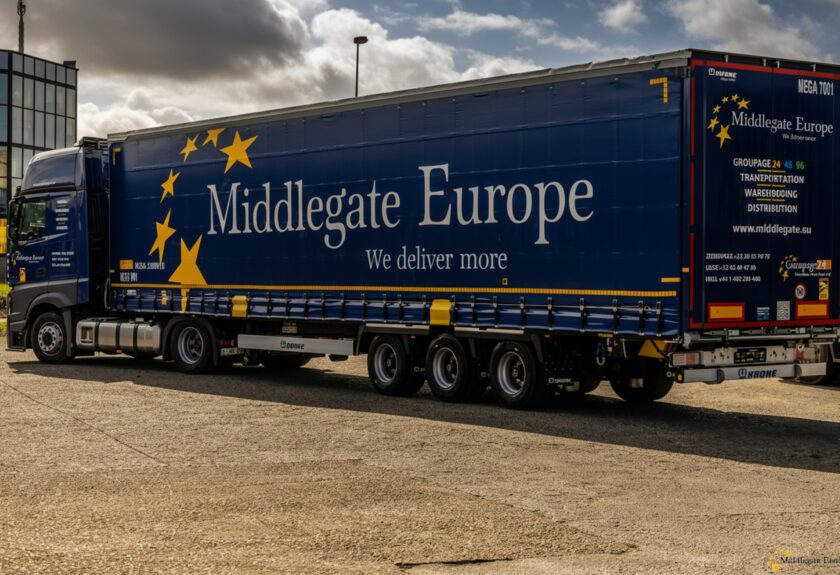
Middlegate runs customs, warehousing, and transport as a single operation. The in-house customs team in Zeebrugge processes declarations against live warehouse inventory, not against paperwork forwarded from a third party. When a shipment enters Middlegate’s bonded warehouse, the customs record and the physical stock are managed in the same system, by the same team.
That integration matters more in 2026 than it did in 2024. With ICS2 tightening pre-arrival requirements and the €150 exemption ending, the volume and accuracy demands on customs teams are increasing. Operators who handle compliance in-house, with BRC AA and ISO 9001 certification underpinning their processes, can absorb that pressure without creating bottlenecks for the customer.
For businesses trading between the UK and EU through the Channel corridor, Middlegate’s operations in Zeebrugge, Liège, and Hull provide a customs-capable presence on both sides of the border. That’s not a marketing claim. It’s an operational structure built over 35 years of cross-Channel logistics.
Need logistics support?
Get a warehousing, transport, or fulfilment quote from Middlegate Europe.
Request A Quote

