

What Happens Between the Gate and the Truck
Most logistics websites describe warehousing in abstract terms. Capacity figures. Square metres. Certifications listed in a row. That information matters, but it does not explain what actually happens when a container arrives at the gate.
At Middlegate’s Zeebrugge facility, that process runs on a sequence that has been refined over more than three decades.
Receiving: The First 30 Minutes Matter
When a container or groupage load arrives, the receiving team checks the shipment against the pre-advised booking. Quantities, condition, labelling, lot codes, and temperature records for food-grade goods are verified on the dock before anything moves into storage.
This is where problems get caught early. A mislabelled pallet identified at receiving is a minor correction. The same pallet discovered during outbound picking is a delay, a cost, and a customer issue.
Middlegate’s warehouse management system logs every pallet at the point of receipt. For bonded cargo, customs status is assigned immediately — goods under bond are tracked separately from free-circulation stock from the moment they enter the building.
Storage: Bonded and Free Circulation Under One Roof
Running bonded and free-circulation storage in the same facility sounds straightforward. In practice, it requires strict segregation, accurate inventory control, and a customs team that understands the regulatory requirements in real time.
Middlegate holds both bonded and free-circulation areas across its Zeebrugge and Liège sites. The in-house customs team manages T1/T2 status, fiscal representation, and documentation without handing the file to a third party. One stock truth, visible to the customer, updated as goods move through the building.
For BRC AA-certified food storage, temperature monitoring, pest control protocols, and hygiene standards run continuously — not only during audits.
Pick-and-Pack: Where Accuracy Meets Speed
Outbound operations range from full-pallet dispatch to single-item e-commerce picks. The warehouse team works from system-generated pick lists, scanning each item to confirm accuracy before packing.
For customers running omnichannel flows — wholesale pallets to retail distribution centres alongside individual orders to end consumers — the picking process adapts without requiring separate warehouse zones or duplicate inventory.
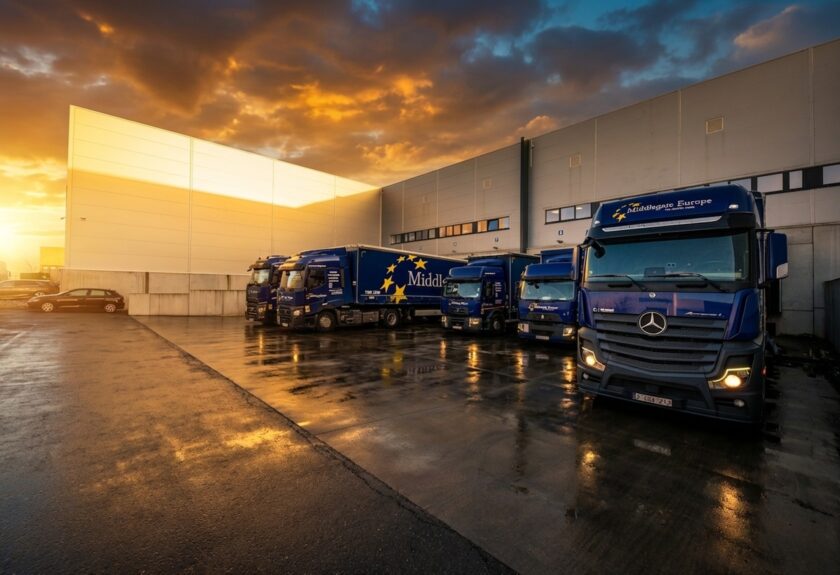
The loading team sequences outbound pallets to match delivery routes, working directly with Middlegate’s transport planners. Because the fleet is owned and operated in-house, there is no handover gap between the warehouse door and the truck.
The Human Side of Automation
The logistics industry is investing heavily in warehouse automation. Automated forklifts, robotic sortation, and AI-driven inventory management are real and growing. Middlegate monitors these developments closely.
But automation works best when it supports trained people, not when it replaces judgment. A warehouse operative who spots a damaged pallet during a pick run, a receiving clerk who catches a documentation error, a customs specialist who flags a tariff code issue before clearance — these are the moments that protect the flow.
Technology handles volume. People handle exceptions. The best warehouse operations invest in both.
One Operation, No Gaps
The thread running through Middlegate’s warehouse process is control. Receiving, storage, customs, picking, packing, loading, and transport are managed by one team, in one system, under one roof. There is no subcontractor handover between the dock and the delivery address.
That is the operational reality behind the phrase “asset-based 3PL.” Not a marketing line — a way of running the building.
Need logistics support?
Get a warehousing, transport, or fulfilment quote from Middlegate Europe.
Request A Quote

